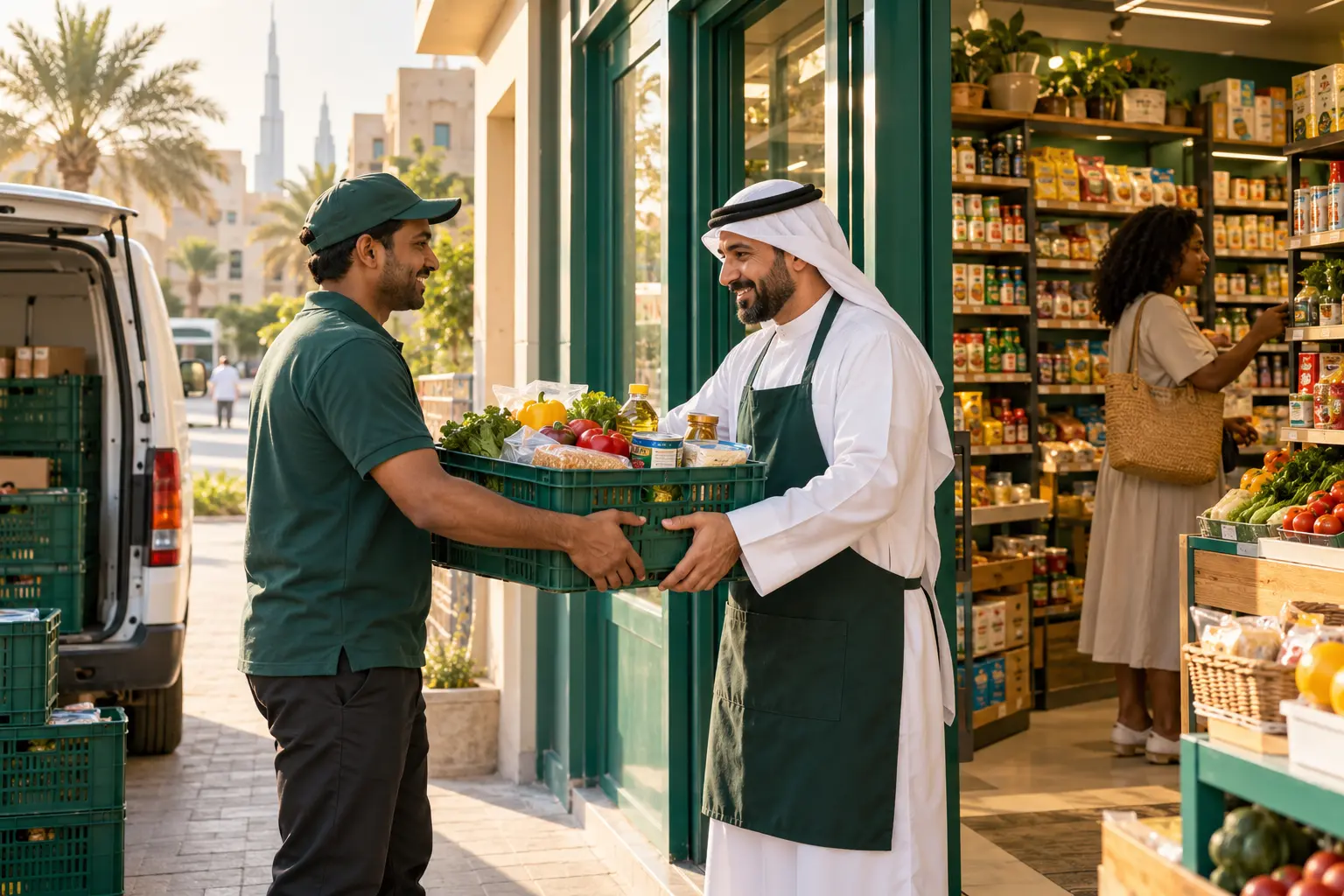
Market access, shelf availability and reliable replenishment turn an FMCG brand promise into an experience customers can actually obtain.
A promise has to be available
A consumer can recognise a brand, prefer it and still buy something else if it is absent from the outlet they use. For fast-moving consumer goods, the route from supplier to shelf is therefore part of the brand experience. Distribution determines where the promise is encountered and whether the product is there when the need arises.
This does not mean that logistics and branding are the same discipline. It means that brand strategy must account for the operational capabilities that make its positioning credible. Accessibility, freshness, reliability and convenience are experienced through a network, not delivered by a slogan.
Market access is a strategic choice
A distribution channel connects the business with a particular buying context. A neighbourhood grocery, supermarket, specialist retailer, hospitality account and online platform may serve different needs. Coverage should follow the target audience and proposition, rather than treating every possible outlet as equally valuable.
For an illustrative FMCG business entering the UAE, the first question is which purchase occasions and outlet types matter most. The next is whether the available partners can maintain the intended assortment, product handling, service and commercial discipline. Adding a distributor creates an agreement; it does not automatically create effective market access.
Make speed dependable
Fast delivery can support the brand when it reduces uncertainty or restores availability. But maximum speed everywhere may create excessive cost, poorly consolidated routes or promises the organisation cannot maintain. The useful commitment is a service level that fits each channel and is delivered consistently.
Define order cut-off times, delivery windows, minimum order conditions, exception handling and replenishment responsibilities. Make these understandable to trade customers. An honest next-day commitment that is kept may create a better relationship than an urgent promise that changes repeatedly.
Coordinate the route to the shelf
Integrate sales visits, demand information, warehouse preparation, route planning and retailer communication. A representative who records stock conditions should help trigger an appropriate replenishment decision. A delivery exception should reach the person who can update the customer. Shared information is valuable when it changes an action.
GS1’s work in retail and traceability provides a reference for consistent product identification and information exchange. In practice, common identifiers and accurate product data help participants talk about the same item. They do not remove the need for disciplined forecasting, physical handling and accountable management.
Treat channel partners as brand participants
Distributors, sales representatives, merchandisers and delivery teams shape what retailers believe about the brand. Their accuracy, responsiveness and conduct become part of the brand’s reputation. Give them clear product information, service standards and a realistic escalation route.
Commercial incentives need to support the intended experience. Pushing volume into a channel without regard to sell-through can create ageing stock, discount pressure and strained relationships. Review whether targets reward sustainable availability or merely shipment. Brand consistency requires alignment between commercial behaviour and the public promise.
Measure the experience behind the coverage
Useful measures include on-shelf availability in priority outlets, order fulfilment, on-time and in-full delivery, stockout duration, returns, product condition and complaint resolution. Numeric distribution shows how broadly the brand is listed; availability shows whether a customer can actually buy it. Neither should be confused with proven consumer preference.
Choose measures suited to the operating model and establish a baseline before setting ambitious targets. Use the results to improve outlet selection, visit frequency, assortment and service. When market access becomes coherent and reliable, distribution helps turn a brand from a recognised idea into a dependable everyday choice.
From thinking to practice
Explore route-to-market strategy and go-to-market planning, or discuss your channel challenge.
Sources and further reading
The recommendations above express Brandzcore’s strategic interpretation. Illustrative scenarios are not client case studies.